
Introduction to Acupuncture and Pattern Diagnosis
Acupuncture is a core part of traditional Chinese medicine (TCM) and has been practised for more than two thousand years. Today it's used in many countries, most often for pain, headaches and stress-related concerns, usually alongside conventional care [1]. Many people who book acupuncture are dealing with more than one concern at a time. TCM looks at these together through pattern diagnosis, which looks for the shared picture behind several symptoms rather than treating each one in isolation [2].
So what does that mean in practice? Acupuncture uses very fine, sterile, single-use needles placed at specific points on the body. Points are chosen according to your overall pattern, so one treatment plan can take several of your concerns into account at once. How much each concern changes varies from person to person.
What People Commonly Come to Us For:
-
Chronic Back and Neck Pain: a large analysis of data from around 20,000 patients found acupuncture performed better than both sham and no acupuncture for chronic back and neck pain, with modest effects [3].
Osteoarthritis and Shoulder Pain: the same analysis found similar modest benefits for osteoarthritis and chronic shoulder pain [3].
Other Muscle and Joint Pain: many people also seek acupuncture for sciatica, tennis elbow and general muscle tension. The evidence varies by condition, so we'll talk you through what to expect.
-
Migraines: Cochrane reviews found acupuncture can reduce how often episodic migraines occur [4].
Tension-Type Headaches: acupuncture can help people with frequent or chronic tension-type headaches [5].
When to See Your GP First: a sudden, severe or 'worst ever' headache, or a headache with fever, confusion, weakness or vision changes, needs urgent medical attention.
-
Stress and Tension: many people seek acupuncture to help them unwind and manage everyday stress. Some people feel relaxed after a session, though responses vary.
Sleep: research on acupuncture for insomnia is still developing and results so far are mixed [6].
Mental Health: for anxiety, depression or ongoing low mood, please see your GP or psychologist. Acupuncture can be used as supportive care alongside them, not instead of them.
-
Bloating and Discomfort: people often ask about bloating, irregular bowels and digestion that worsens under stress. In TCM, these are often linked to Spleen and Liver patterns.
IBS: trials comparing real and sham acupuncture for irritable bowel syndrome haven't shown a clear difference [7], so we're upfront about what to expect.
When to See Your GP First: blood in your stool, unexplained weight loss, ongoing changes in bowel habits or severe pain should always be checked by a doctor.
-
Period Pain: a Cochrane review found there isn't yet enough evidence to say whether acupuncture is effective for period pain [8].
PMS: some people seek acupuncture as supportive care for premenstrual symptoms. Research is limited, so we don't promise outcomes.
When to See Your GP First: very heavy, irregular or severely painful periods should be assessed by your GP.
-
Ask Us: if your concern isn't listed here, ask. You'll get an honest answer about whether acupuncture is a reasonable option for you.
Another Professional First: if your GP, a physiotherapist or another health professional is a better first step, we'll tell you.
How One Treatment Plan Can Consider Several Symptoms
In TCM theory, acupuncture works by stimulating specific points on the body to regulate the flow of Qi (energy) and restore balance between the body's systems. Rather than focusing on one symptom at a time, TCM looks for the underlying pattern that links them [9]. For example, someone with headaches, stress and tight shoulders may share one underlying pattern, so a single treatment plan can be built around all three. That doesn't mean every symptom will change, or change at the same pace, but nothing is overlooked just because it wasn't your main complaint.
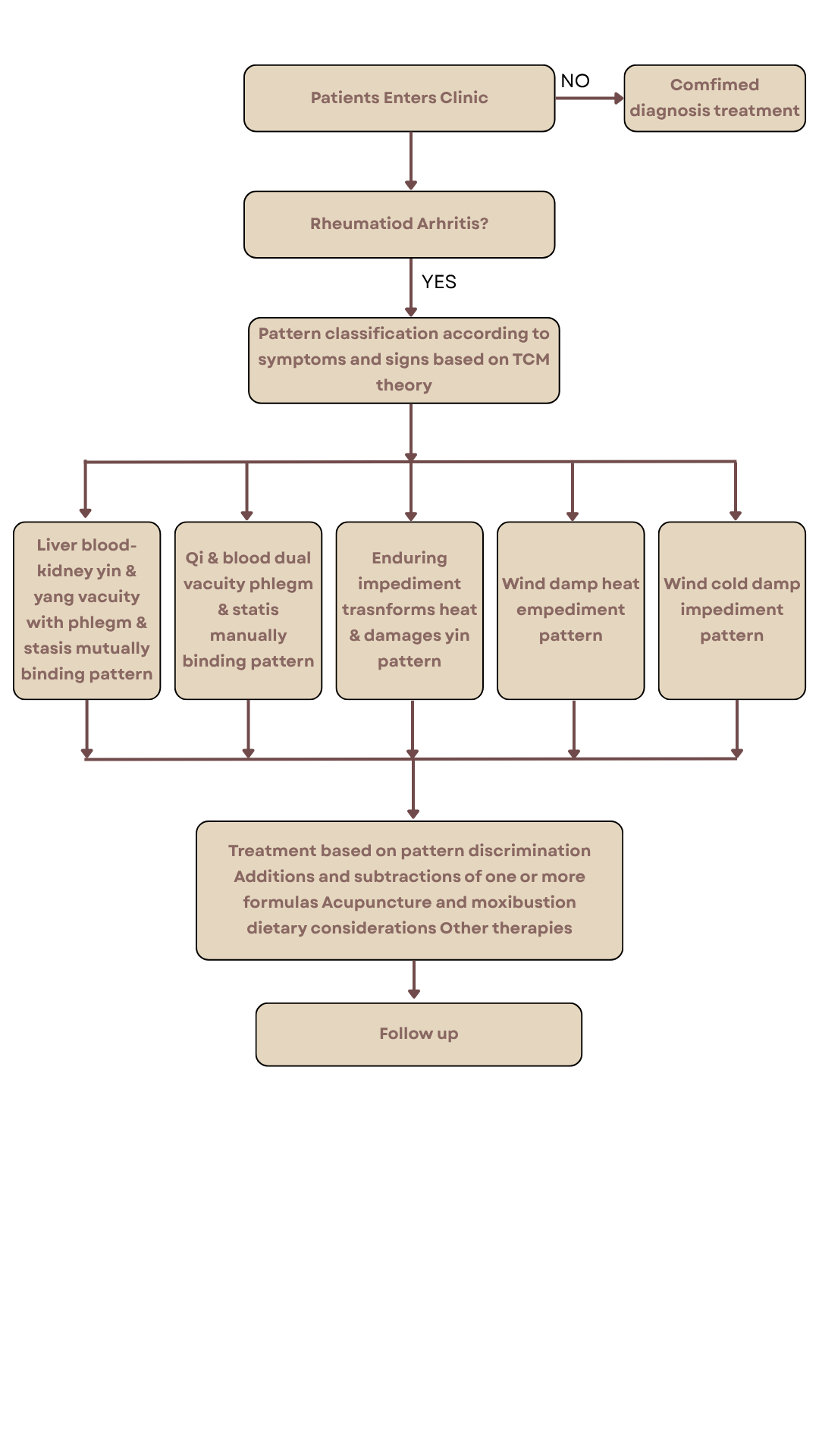
Pattern Diagnosis in TCM: Looking at the Whole Picture
Pattern diagnosis is how a TCM practitioner identifies imbalances in the body's systems, such as Qi, Blood, Yin, Yang and the organ systems. In TCM theory, one imbalance can show up as several different symptoms [9]. These patterns are traditional descriptions, not medical diagnoses, and they don't replace a diagnosis from your GP. Two common examples:
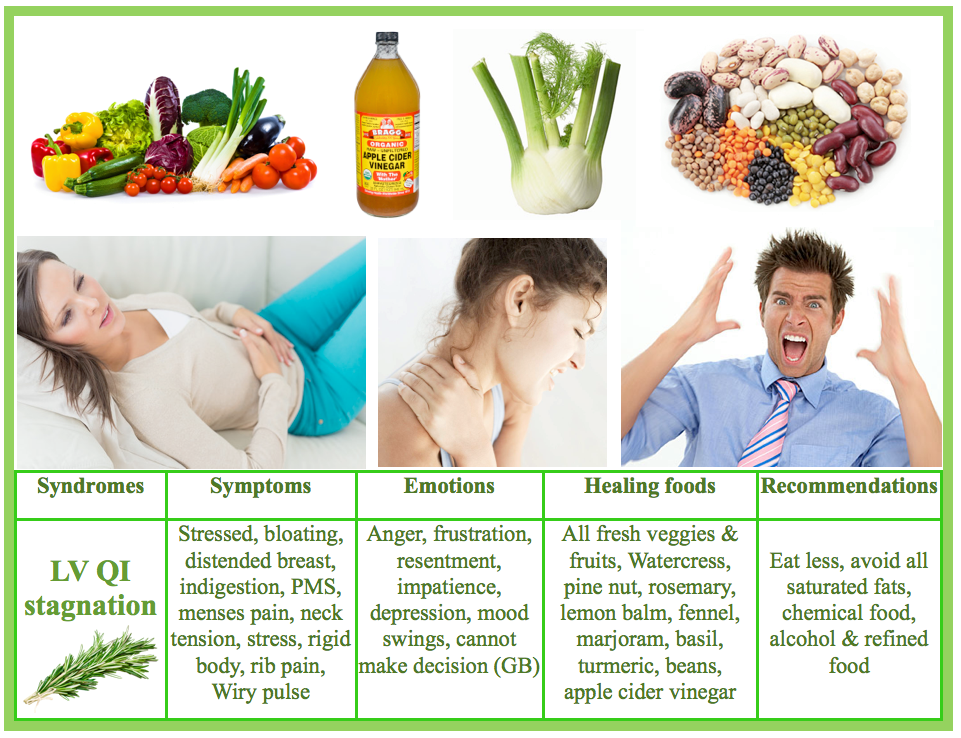
Liver Qi Stagnation
In TCM theory, this pattern is linked with stress, frustration, tight shoulders, headaches and period pain. They may seem unrelated, but TCM sees them as sharing one root: Liver Qi that isn't flowing smoothly [9].
Common signs: Stress, frustration, irritability, tight trapezius muscles, headaches and period pain.
How treatment is approached: Points are chosen to encourage the smooth flow of Liver Qi, and some people feel more relaxed after a session. For frequent headaches and migraines, research suggests acupuncture can reduce how often they occur [4, 5]. For period pain, the evidence is still limited [8].
Image: Liver Qi Stagnation (AcuPro Academy, 2014)
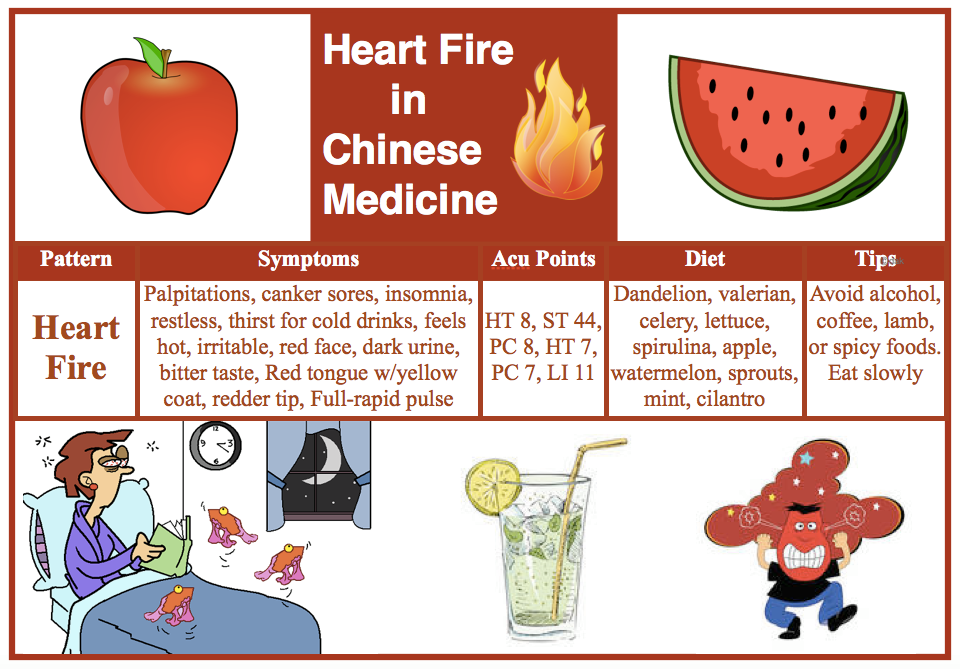
Heart Fire
In TCM theory, this pattern is linked with restlessness, feeling anxious, trouble sleeping, palpitations and mouth ulcers. TCM connects these through one underlying imbalance: excess Heat affecting the Heart [9].
Common signs: Restlessness, a racing mind at night, trouble falling asleep, palpitations and mouth ulcers.
How treatment is approached: Points are chosen to clear Heat and calm the Shen (spirit). Research on acupuncture for sleep and anxiety is still developing [6], so we offer it as supportive care. New or ongoing palpitations should always be checked by your GP first.
Image: Heart Fire Blazing (AcuPro Academy, 2015)
What Does the Research Say Acupuncture Can Help With?
It's a fair question, and you deserve a straight answer. The strongest research for acupuncture is in some types of chronic pain and headaches [3, 4, 5]. For many other concerns, such as sleep, stress, digestion and period pain, research is ongoing and results so far are mixed [6, 7, 8]. You may have seen claims that acupuncture treats over 100 conditions. Those lists mostly trace back to older reviews of small, early trials, so we don't make that claim. What TCM does offer is a way of looking at several symptoms together through pattern diagnosis, rather than treating each one in isolation.
Acupuncture Side Effects and Safety
Acupuncture is generally safe when performed by an Ahpra-registered practitioner using sterile, single-use needles, and serious complications are rare. Side effects are usually mild and short-lived, such as tenderness or a small bruise where a needle was placed, brief light-headedness, or feeling relaxed or tired after a session. Please let us know if you're pregnant, take blood-thinning medication, or have a bleeding disorder or pacemaker.
Dry Needling vs Acupuncture, and Cupping Therapy
Acupuncture is often confused with related therapies. Dry needling is used by some physiotherapists and other practitioners, and focuses on muscle trigger points using Western anatomy. Acupuncture comes from TCM, and points are chosen according to your overall pattern, which can include points away from where you feel symptoms. Cupping is a separate traditional technique that uses suction cups on the skin. It's sometimes combined with acupuncture in the same session and can leave temporary round marks that usually fade within a few days.
Conclusion
Acupuncture can't fix everything, and we won't pretend it can. What it offers is a whole-person approach: through pattern diagnosis, your practitioner looks at how your symptoms connect and plans treatment around you, not just one complaint [2].
If you're dealing with several concerns at once, a consultation is a chance to talk through the full picture and get an honest view on whether acupuncture suits you. Acupuncture works alongside your GP and other healthcare, not instead of it.
Book an Acupuncture Consultation in Brisbane
The Gentle Needle Guy practises from a private studio in Bridgeman Downs on Brisbane's northside, close to Aspley, Chermside, Carseldine and Albany Creek, and from a private treatment room on Brunswick Street, New Farm, close to Teneriffe, Newstead and Fortitude Valley. Whoever you see, check they're an Ahpra-registered acupuncturist. You can search the public register on the Ahpra website.
It's worth asking about:
private health extras cover (Medicare doesn't rebate acupuncture provided by acupuncturists)
session fees and how long each appointment runs
appointment availability at each location
booking options, in person or online
Because TCM looks at the whole picture, mention everything that's bothering you during your consultation, not just your main concern. If anything suggests you need medical attention first, we'll tell you.
Ready to talk it through? Make an enquiry or book your first appointment online.
References:
World Health Organization. (2013). WHO Traditional Medicine Strategy 2014–2023. World Health Organization.
Kaptchuk, T. J. (2000). The Web That Has No Weaver: Understanding Chinese Medicine. McGraw-Hill Education.
Vickers, A. J., et al. (2018). Acupuncture for Chronic Pain: Update of an Individual Patient Data Meta-Analysis. Journal of Pain.
Linde, K., et al. (2016). Acupuncture for the Prevention of Episodic Migraine. Cochrane Database of Systematic Reviews.
Linde, K., et al. (2016). Acupuncture for the Prevention of Tension-Type Headache. Cochrane Database of Systematic Reviews.
Cheuk, D. K. L., et al. (2012). Acupuncture for Insomnia. Cochrane Database of Systematic Reviews.
Manheimer, E., et al. (2012). Acupuncture for Treatment of Irritable Bowel Syndrome. Cochrane Database of Systematic Reviews.
Smith, C. A., et al. (2016). Acupuncture for Dysmenorrhoea. Cochrane Database of Systematic Reviews.
Maciocia, G. (2015). The Foundations of Chinese Medicine (3rd ed.). Elsevier.