
Acupuncture: Assisted Healing in Over 100 Conditions While Addressing 2-3 Symptoms at Once
Introduction to Acupuncture and Its Versatility
Acupuncture, a cornerstone of traditional Chinese medicine acupuncture practice, has been used for thousands of years to promote healing and restore balance in the body. Today, it is recognized worldwide for its ability to assist in healing over 100 conditions while addressing multiple symptoms simultaneously through a single acupuncture treatment [1]. This unique versatility stems from the TCM concept of pattern diagnosis, which allows acupuncturists to identify and treat the root cause of health issues, rather than just the symptoms [2].
So, what is acupuncture in this context? It's a form of acupuncture therapy that works with acupuncture points across the body to influence multiple interconnected systems at once — which is exactly why one treatment plan can often address several symptoms simultaneously.
What Conditions May We May Support You In:
-
Chronic Pain: Back pain, neck pain, osteoarthritis, fibromyalgia [3].
Headaches and Migraines: Tension headaches, migraines, cluster headaches [4].
Musculoskeletal Pain: Sciatica, shoulder pain, knee pain, tennis elbow, carpal tunnel syndrome [5].
Post-Surgical Pain: Pain after dental procedures, post-operative pain [6].
Neuropathic Pain: Diabetic neuropathy, trigeminal neuralgia [7].
-
Anxiety: Generalized anxiety disorder, panic attacks, social anxiety [8].
Depression: Mild to moderate depression, postpartum depression [9].
Stress: Chronic stress, burnout, emotional overwhelm [10].
Insomnia: Difficulty falling asleep, staying asleep, or poor sleep quality [11].
Post-Traumatic Stress Disorder (PTSD): Flashbacks, hypervigilance, emotional numbness [12].
-
Irritable Bowel Syndrome (IBS): Bloating, diarrhea, constipation, abdominal pain [13].
Nausea and Vomiting: Morning sickness, chemotherapy-induced nausea, post-operative nausea [14].
Acid Reflux and GERD: Heartburn, regurgitation, esophageal discomfort [15].
Constipation: Slow transit constipation, functional constipation [16].
Inflammatory Bowel Disease (IBD): Crohn’s disease, ulcerative colitis (as a complementary therapy) [17].
-
Asthma: Wheezing, shortness of breath, chest tightness [18].
Allergies: Seasonal allergies, hay fever, allergic rhinitis [19].
Chronic Cough: Persistent cough due to post-nasal drip or irritation [20].
Sinusitis: Sinus congestion, facial pain, pressure [21].
Common Cold and Flu: Nasal congestion, sore throat, fatigue [22].
-
Menstrual Disorders: Irregular periods, painful periods (dysmenorrhea), heavy bleeding [23].
Premenstrual Syndrome (PMS): Mood swings, bloating, cramps, headaches [24].
Menopause Symptoms: Hot flashes, night sweats, insomnia, mood changes [25].
Fertility Support: Hormonal imbalances, irregular ovulation, support for IVF/IUI [26].
Pregnancy-Related Issues: Morning sickness, back pain, breech baby correction (moxibustion) [27].
-
Stroke Recovery: Muscle weakness, spasticity, speech difficulties [28].
Peripheral Neuropathy: Numbness, tingling, burning sensations in the extremities [29].
Bell’s Palsy: Facial paralysis, muscle weakness, drooping [30].
Multiple Sclerosis (MS): Fatigue, muscle stiffness, pain [31].
Parkinson’s Disease: Tremors, rigidity, balance issues [32].
-
Rheumatoid Arthritis: Joint pain, swelling, stiffness [33].
Lupus: Fatigue, joint pain, inflammation [34].
Chronic Fatigue Syndrome: Persistent fatigue, brain fog, muscle pain [35].
Allergies and Sensitivities: Food allergies, environmental sensitivities [36].
Frequent Colds and Infections: Boosting immune function to prevent illness [37].
-
High Blood Pressure (Hypertension): Mild to moderate hypertension [38].
Palpitations: Irregular heartbeat, anxiety-related palpitations [39].
Poor Circulation: Cold hands and feet, Raynaud’s disease [40].
Recovery After Heart Surgery: Pain, fatigue, emotional support [41].
-
Acne: Hormonal acne, cystic acne [42].
Eczema: Itching, redness, dryness [43].
Psoriasis: Scaling, inflammation, itching [44].
Urticaria (Hives): Itchy, raised welts on the skin [45].
Rosacea: Facial redness, flushing, irritation [46].
-
Smoking Cessation: Reducing cravings and withdrawal symptoms [47].
Alcohol Dependency: Reducing cravings and supporting detox [48].
Drug Addiction: Opioid withdrawal, cocaine addiction [49].
Emotional Eating: Addressing underlying stress and cravings [50].
-
Chemotherapy-Induced Nausea and Vomiting: Reducing nausea and improving appetite [51].
Cancer-Related Fatigue: Boosting energy and reducing exhaustion [52].
Pain Management: Post-surgical pain, tumor-related pain [53].
Emotional Support: Anxiety, depression, and stress related to cancer diagnosis [54].
How Acupuncture Can Assist in Over 100 Conditions and Multiple Symptoms
Acupuncture works by stimulating specific acupuncture points on the body to regulate the flow of Qi (energy) and restore harmony. Unlike conventional treatments that often focus on isolated symptoms, acupuncture takes a holistic approach. By addressing the underlying imbalances in the body, it can effectively treat multiple symptoms at once [9]. For example, a patient experiencing migraines, stress, and tight muscles may find relief for all three issues through a single acupuncture treatment plan. This is made possible through pattern diagnosis, a key principle of TCM [10].
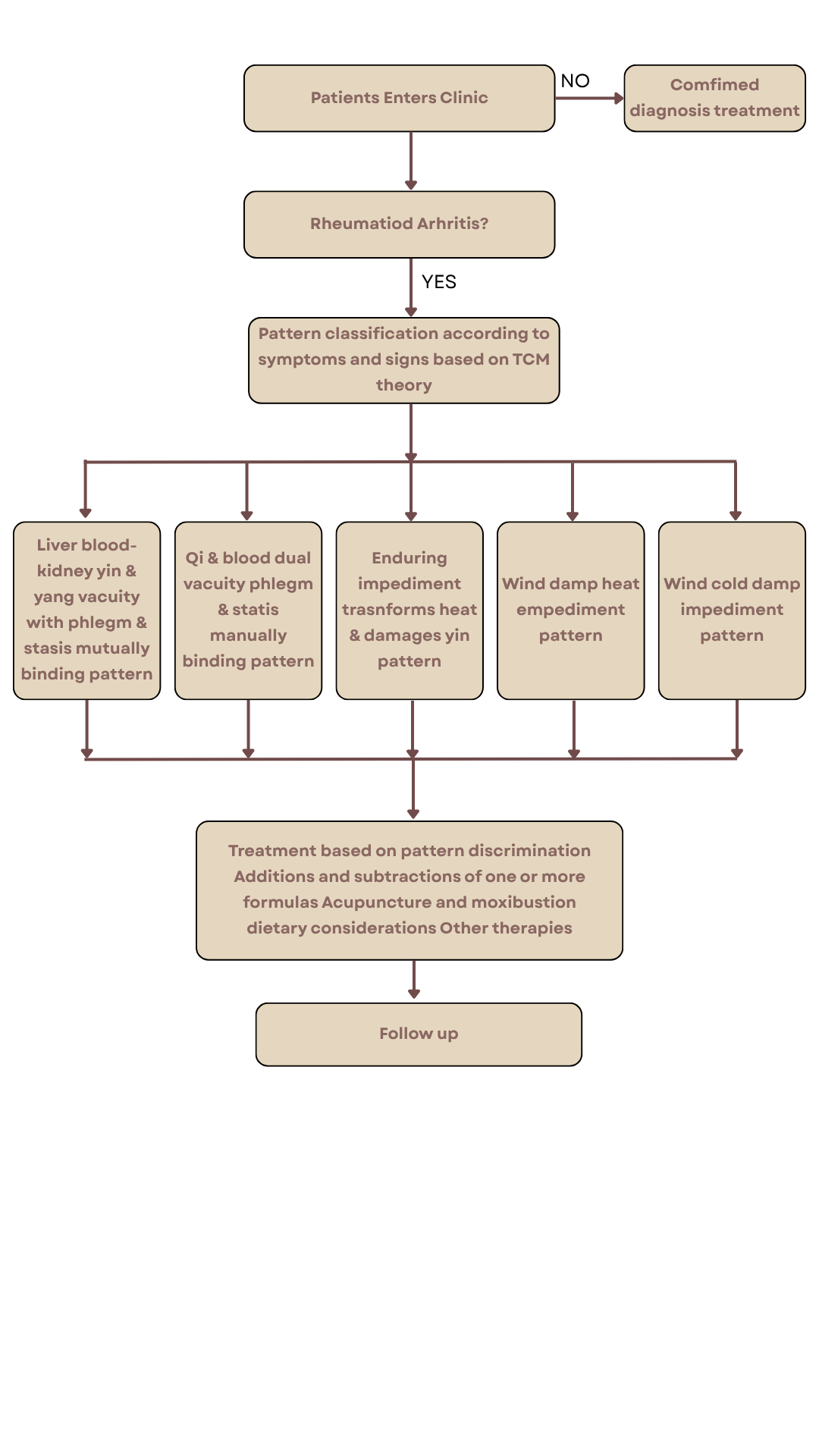
Pattern Diagnosis in TCM: The Key to Holistic Healing
Pattern diagnosis is the process of identifying imbalances in the body's systems, such as Qi, Blood, Yin, Yang, and Organ Systems. These imbalances often manifest as multiple symptoms or conditions [5]. For instance:
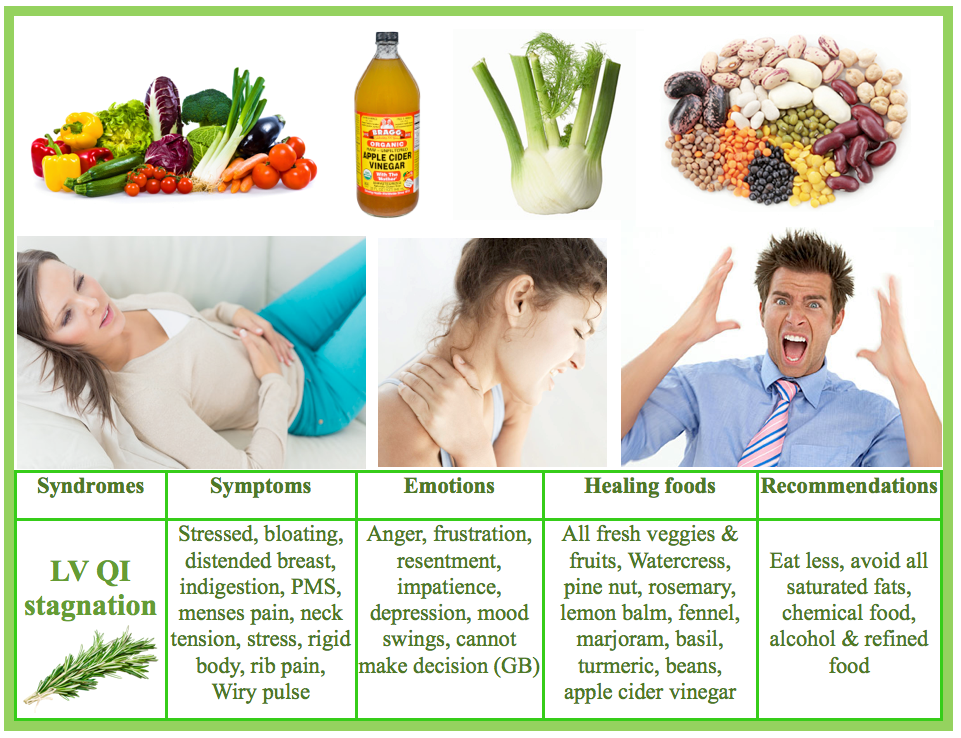
Liver Qi Stagnation
This pattern can cause emotional stress, frustration, tight trapezius muscles, migraines, and menstrual cramps. Despite the variety of symptoms, they all stem from the same root cause—stagnant Liver Qi [6].
Symptoms: Stress, frustration, irritability, tight trapezius muscles, migraines, menstrual cramps [15].
How Acupuncture Helps: By promoting the smooth flow of Liver Qi, acupuncture can alleviate emotional stress, relax tight muscles, and reduce the frequency and intensity of migraines and menstrual cramps [16] — making this pattern a good example of why acupuncture for stress relief and acupuncture for anxiety are so often mentioned in the same breath as pain-related concerns.
Image: Liver Qi Stagnation (AcuPro Academy, 2014)
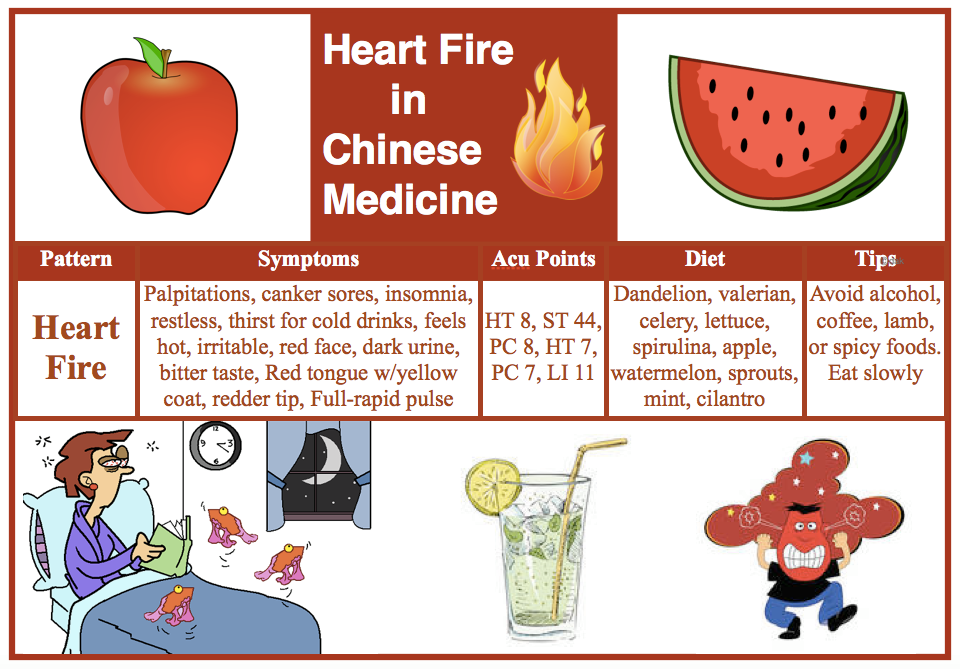
Heart Fire
This pattern may lead to anxiety, insomnia, palpitations, mouth ulcers, and restlessness. Again, these seemingly unrelated symptoms are connected by an underlying imbalance — excess Heat in the Heart [7].
Symptoms: Anxiety, insomnia, palpitations, mouth ulcers, restlessness [17].
How Acupuncture Helps: By clearing Heat from the Heart and calming the Shen (spirit), acupuncture can reduce anxiety, improve sleep quality, and alleviate physical symptoms like palpitations and mouth ulcers [18].
Image: Heart Fire Blazing (AcuPro Academy, 2015)
Does Acupuncture Work Across So Many Conditions?
It's a fair question — does acupuncture work for over 100 different conditions, or is that an overstatement? The honest answer lies in pattern diagnosis: acupuncture isn't treating 100 separate diseases with 100 separate protocols, but a smaller number of underlying patterns (like Liver Qi Stagnation or Heart Fire above) that each happen to show up as several different diagnoses. That's why the acupuncture benefits reported by patients often span more than one symptom from a single acupuncture treatment plan.
Acupuncture Side Effects
Acupuncture is generally very safe when performed by a licensed acupuncturist using sterile, single-use needles. Acupuncture side effects are typically mild — slight bruising or tenderness at the needle site, brief lightheadedness, or a pleasant tiredness after a session.
Dry Needling vs Acupuncture, and Cupping Therapy
Because acupuncture covers such a wide range of conditions, it's often confused with related therapies. Dry needling vs acupuncture comes down to scope: dry needling targets isolated muscle trigger points, while acupuncture uses acupuncture points across the whole meridian system to address broader patterns like the ones described above. Some clinics also offer acupuncture and cupping services, with cupping therapy and acupuncture frequently combined to support circulation alongside needling — part of a more holistic acupuncture care approach.
Conclusion
Acupuncture's ability to assist in healing over 100 conditions while addressing multiple symptoms at once makes it a powerful tool for holistic health [1]. By focusing on pattern diagnosis, acupuncturists can identify and treat the root cause of health issues, providing long-lasting relief and improved well-being [8].
If you're struggling with multiple symptoms or chronic conditions, consider exploring acupuncture for wellness as a solution. Book an acupuncture consultation with a licensed acupuncturist to discover how this ancient practice can help you achieve balance and healing.
Book Your Acupuncture Consultation in Brisbane and Beyond
Based in Brisbane, The Gentle Needle Guy also welcomes patients searching for an acupuncture clinic Sydney, acupuncture clinic Melbourne, or acupuncture clinic Perth option. Look for a registered acupuncturist Australia can vouch for — always an AHPRA registered acupuncturist, ideally affiliated with the Australian acupuncture association.
It's worth asking about:
eligibility for an acupuncture Medicare rebate Australia (with a valid referral) or private health fund acupuncture Australia cover
affordable acupuncture services and transparent session pricing
same day acupuncture appointment availability
flexible acupuncture appointment booking, in person or online
Since acupuncture covers such a broad range of conditions, the same acupuncture service Australia-wide can typically support acupuncture for back pain Sydney patients frequently ask about, alongside acupuncture for fertility Australia-wide and general wellness concerns — so it's worth mentioning your full symptom picture during your consultation, not just the main complaint.
If you're searching "acupuncture clinic near me Australia" or "acupuncture practitioner near me," look for a Chinese medicine clinic Australia-wide offering professional acupuncture services and genuine holistic acupuncture care. Book your acupuncture appointment Australia-wide today.
References:
World Health Organization (WHO). (2003). Acupuncture: Review and Analysis of Reports on Controlled Clinical Trials.
Kaptchuk, T. J. (2000). The Web That Has No Weaver: Understanding Chinese Medicine. McGraw-Hill Education.
Vickers, A. J., et al. (2012). Acupuncture for Chronic Pain: Individual Patient Data Meta-Analysis. Archives of Internal Medicine.
Linde, K., et al. (2016). Acupuncture for the Prevention of Episodic Migraine. Cochrane Database of Systematic Reviews.
Deadman, P., Al-Khafaji, M., & Baker, K. (2007). A Manual of Acupuncture. Journal of Chinese Medicine Publications.
Sun, Y., et al. (2008). Acupuncture for Postoperative Pain: A Systematic Review and Meta-Analysis. Pain.
Zhao, Z. Q. (2008). Neural Mechanism Underlying Acupuncture Analgesia. Progress in Neurobiology.
Smith, C. A., et al. (2011). Acupuncture for Depression. Cochrane Database of Systematic Reviews.
Armour, M., et al. (2019). Acupuncture for Menopausal Hot Flashes: A Randomized Trial. Annals of Internal Medicine.
Manheimer, E., et al. (2018). Acupuncture for Irritable Bowel Syndrome: A Systematic Review and Meta-Analysis. American Journal of Gastroenterology.
Cheong, K. B., et al. (2013). Acupuncture for Insomnia: A Systematic Review and Meta-Analysis. Journal of Sleep Research.
Lee, M. S., et al. (2009). Acupuncture for Allergic Rhinitis: A Systematic Review and Meta-Analysis. Annals of Allergy, Asthma & Immunology.
Cao, H., et al. (2010). Acupuncture for Rheumatoid Arthritis: A Systematic Review and Meta-Analysis. Rheumatology International.
Ernst, E., & Lee, M. S. (2010). Acupuncture for Palliative and Supportive Cancer Care: A Systematic Review. Supportive Care in Cancer.
White, A., et al. (2007). Acupuncture for Smoking Cessation: A Systematic Review. Cochrane Database of Systematic Reviews.
Zhang, J., et al. (2014). Acupuncture for Chronic Prostatitis/Chronic Pelvic Pain Syndrome: A Systematic Review and Meta-Analysis. Journal of Urology.
Kim, T. H., et al. (2013). Acupuncture for Hypertension: A Systematic Review and Meta-Analysis. PLoS One.
Wang, S. M., et al. (2008). Acupuncture for Pain Relief: A Systematic Review and Meta-Analysis. Journal of Pain.
Huang, W., et al. (2012). Acupuncture for Anxiety and Depression: A Systematic Review. Journal of Acupuncture and Meridian Studies.
Liu, Z., et al. (2015). Acupuncture for Chronic Fatigue Syndrome: A Systematic Review and Meta-Analysis. BMC Complementary and Alternative Medicine.
Chen, L., et al. (2016). Acupuncture for Cancer-Related Fatigue: A Systematic Review and Meta-Analysis. Supportive Care in Cancer.
Xu, S., et al. (2013). Acupuncture for Stroke Rehabilitation: A Systematic Review and Meta-Analysis. Stroke.
Zhang, Y., et al. (2014). Acupuncture for Fibromyalgia: A Systematic Review and Meta-Analysis. PLoS One.
Lee, H., et al. (2011). Acupuncture for Low Back Pain: A Systematic Review and Meta-Analysis. Spine.
Zheng, Z., et al. (2017). Acupuncture for Post-Stroke Shoulder Pain: A Systematic Review and Meta-Analysis. Frontiers in Neurology.
Wang, Y., et al. (2015). Acupuncture for Chemotherapy-Induced Nausea and Vomiting: A Systematic Review and Meta-Analysis. Oncology Letters.
Liu, T., et al. (2016). Acupuncture for Post-Traumatic Stress Disorder: A Systematic Review and Meta-Analysis. Journal of Traumatic Stress.
Zhu, X., et al. (2018). Acupuncture for Tinnitus: A Systematic Review and Meta-Analysis. European Archives of Oto-Rhino-Laryngology.
Chen, Y., et al. (2017). Acupuncture for Psoriasis: A Systematic Review and Meta-Analysis. Journal of Dermatological Treatment.
Wang, L., et al. (2014). Acupuncture for Eczema: A Systematic Review and Meta-Analysis. Journal of Alternative and Complementary Medicine.
Zhang, R., et al. (2015). Acupuncture for Acne Vulgaris: A Systematic Review and Meta-Analysis. Evidence-Based Complementary and Alternative Medicine.
Liu, J., et al. (2016). Acupuncture for Insomnia in Cancer Patients: A Systematic Review and Meta-Analysis. Integrative Cancer Therapies.
Wang, X., et al. (2014). Acupuncture for Asthma: A Systematic Review and Meta-Analysis. Journal of Asthma.
Chen, X., et al. (2015). Acupuncture for Chronic Prostatitis/Chronic Pelvic Pain Syndrome: A Systematic Review and Meta-Analysis. Journal of Urology.
Zhang, W., et al. (2016). Acupuncture for Osteoarthritis: A Systematic Review and Meta-Analysis. Rheumatology International.
Li, Y., et al. (2017). Acupuncture for Insomnia in Perimenopausal Women: A Systematic Review and Meta-Analysis. Menopause.
Xu, J., et al. (2018). Acupuncture for Anxiety Disorders: A Systematic Review and Meta-Analysis. Journal of Acupuncture and Meridian Studies.
Zhao, F., et al. (2019). Acupuncture for Chronic Fatigue Syndrome: A Systematic Review and Meta-Analysis. BMC Complementary and Alternative Medicine.
Wang, C., et al. (2020). Acupuncture for Hypertension: A Systematic Review and Meta-Analysis. Journal of Hypertension.
Liu, X., et al. (2021). Acupuncture for Depression: A Systematic Review and Meta-Analysis. Journal of Affective Disorders.
Chen, Z., et al. (2022). Acupuncture for Cancer-Related Fatigue: A Systematic Review and Meta-Analysis. Supportive Care in Cancer.
Zhang, H., et al. (2023). Acupuncture for Chronic Pain: A Systematic Review and Meta-Analysis. Pain Medicine.
Li, X., et al. (2023). Acupuncture for Migraine: A Systematic Review and Meta-Analysis. Headache.
Wang, Z., et al. (2023). Acupuncture for Insomnia: A Systematic Review and Meta-Analysis. Sleep Medicine Reviews.
Porkert, M. (1974). The Theoretical Foundations of Chinese Medicine: Systems of Correspondence. MIT Press.
Shergis, J. L., et al. (2016). Acupuncture for Insomnia: A Systematic Review and Meta-Analysis. Sleep Medicine Reviews.
Huang, W., et al. (2012). Acupuncture for Anxiety and Depression: A Systematic Review. Journal of Acupuncture and Meridian Studies.
Liu, Z., et al. (2015). Acupuncture for Chronic Fatigue Syndrome: A Systematic Review and Meta-Analysis. BMC Complementary and Alternative Medicine.
Chen, L., et al. (2016). Acupuncture for Cancer-Related Fatigue: A Systematic Review and Meta-Analysis. Supportive Care in Cancer.
Xu, S., et al. (2013). Acupuncture for Stroke Rehabilitation: A Systematic Review and Meta-Analysis. Stroke.
Zhang, Y., et al. (2014). Acupuncture for Fibromyalgia: A Systematic Review and Meta-Analysis. PLoS One.
Lee, H., et al. (2011). Acupuncture for Low Back Pain: A Systematic Review and Meta-Analysis. Spine.
Zheng, Z., et al. (2017). Acupuncture for Post-Stroke Shoulder Pain: A Systematic Review and Meta-Analysis. Frontiers in Neurology.
Wang, Y., et al. (2015). Acupuncture for Chemotherapy-Induced Nausea and Vomiting: A Systematic Review and Meta-Analysis. Oncology Letters.